home | about | calls | events | services | contact


page-by-page Available Upon Request
 

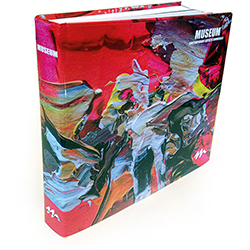
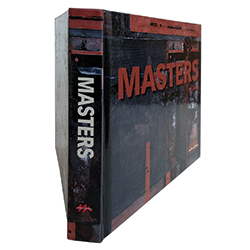
MASTERS-117 Contemporary Artists
Collectible global art book
ISBN: 978-91-89685-18-5

released
December 2008
Hardcover, 264 PAGES
Edited and Published by MOT
DIMENSIONS
: 8.5X8.5 IN / 22x22 cm

The Meaning of the art Truth

Many deal with art in the world. And many of these paint, sculpt, draw and make installations, using all sorts of media. Few, in truth, aim for or obtain appreciable results. Intellectual ability, conceptual lucidity, expressive command, expository clarity, acceptable basic knowledge of the history of art and originality are prerogatives very few have – they may be convinced, or believe, or hope they do, after having outlined marks on a canvas, or made objects or videographic images, in short after having composed a work of art. Cultural “massification” (now called globalisation), which has indeed brought benefits, has also led to an impoverishing of culture itself. However, the dissemination of culture, which invests ever greater numbers of mediatic channels, has not succeeded in teaching large numbers of people how to evaluate and discern. The massifying effect has had a negative impact on the ability of individuals to evaluate the worth of a work of art qua intrinsic value, or even to evaluate a different relationship to art, whether it be ancient, modern or contemporary. How many of us are really convinced and fully understand that the use of a work of art may not only give pleasure and be pleasurable, but above all promote a broadening of cognitive horizons and personal spiritual growth? Very few, I think. Mass culture has effected what could only be termed an example of social blackmail on man: it has coercively imposed on the majority what is deemed most useful for the system, at the same time limiting the individual’s various choices – and therefore his or her possibility of action.

Those who love art because they feel the need to produce it very often limit themselves to this and do not hone their ability through study, reading, debate and, this must be said clearly, they are almost always the root cause of the poor quality of publications on contemporary art that they would like us to consider art simply because it has been reviewed or written about by a famous critic, author or publisher. Do they think the general public are stupid, and that they will devour whatever they’re given as long as they’ve been provided with the right prestigious references? In part, that’s what it would seem like: yes, the meagre, elitist art public seems incapable of imposing their own taste through declared approval, or buying works or art books. This, in fact, is almost always toned down by models that are not always freely chosen but imposed from above, and then assumed by those “below” who want points of reference that offer guarantees in terms of validity, even though this is often a mere fiction. In other words, the referential mechanisms of unmerited legitimacy works extremely well with the art public who, having supinely accepted the present as the pre-existing, seem disposed to continue their consumption of everything that is labelled “good” only because it comes from, or is gilded, by this “higher realm”. The mistaken models towards which the art public’s “taste” has been channelled really seem to make us believe that art is dead, as some of its assassins maintain through their inability to produce art of any value.

Some critics even maintain that everything has already been done, that nothing of any interest could ever exist again. They are suspicious of and revile art that is able to induce pleasure or convey messages, that has meaning; in truth, only because they have nothing to say and do not want others to eradicate this nothing. Why, though, if this is what they want, do they continue to publish? Isn’t it contradictory for them to want to extenuate death, to perpetuate mourning? Why did they start dealing with art? Why on earth do they continue to deal with art, considering their premises? Perhaps they only want to enhance their own prestige, their academic careers, and this is how they are able to do it... Have these poets ever posed themselves the problem of the consumption of art, or wondered if what they write might ever reach a public made up not just of people who make art, or want to make art, or study it?

Officially, or “semi-officially”, and carefully evaluating the latest poetic production and the generalised attitude of these seigneurs de l’art (who are, with due exceptions, generals without troops), you are overwhelmed by their inability, or even worse their unwillingness, to examine or even face the problem of the dissemination-popularisation of the artistic product among a vast public. It seems that this doesn’t interest them much at all, for they are by no means committed to formulating hypotheses about this work or coming up with strategies or solutions. What’s more, if they are quizzed on the argument they reply evasively or by deploying commonplaces: art is apparently necessarily difficult, and therefore unable to galvanise larger numbers of consumers. Nor do they even dream of considering their own enormous responsibilities vis-à-vis the entire situation, or of attempting to invert this negative trend, which is death-inducing and counterproductive, most evidently for themselves as well as art in and of itself and contemporary and future artists. Obviously, the situation is certainly not a positive one, but it shouldn’t lead artists, critics and art lovers to assume that everything is destined to remain as it is now or that it will get worse. Only if each one of us, individually and through an act of personal will, decides to set as their main aim that of bucking the trend and begin to feel hopeful and think of a new collocation of art within the social, able to invade places within our daily life in the same way that news programmes, soap operas and goods in general have, even by using the same type of invasiveness they have used, then art may well begin to regain some of the ground it has lost.
(Excerpt) ANDREA PAGNES, art critic, editor,(Venice, Italy

page-by-page Available Upon Request
 
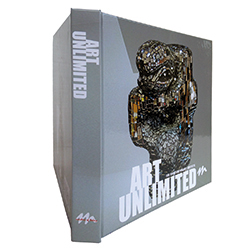
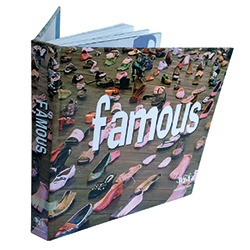
FAMOUS -121 Contemporary Artists
ISBN: 9789189685116
released June  2007
Hardcover, 262 PAGES
EditEd and Published by MOT
PUBLISHEd by MOT
DIMENSIONS: 8.5X8.5 IN / 22x22 cm
page-by-page Available Upon Request
 
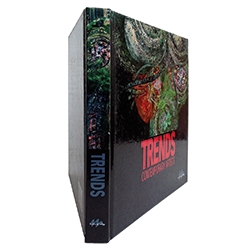
tRENDS-136 Contemporary Artists
Collectible global art book
ISBN: 978-91-89685-17-8
released December 2008
Hardcover, 168 PAGES
Edited and Published by MOT
DIMENSIONS
: 8.5X8.5 IN / 22x22 cm
 

To mark the beginning

It looks like a black line, rising at dusk. A sharp purple-grey cloud that becomes obscure and then grows endlessly. While it rises, the sky – with all its stars - begins to darken in my sight.
Picture it! It is as if someone – which I never knew - has abruptly rang my bell, warning me that soon I’m going to get lost, drifting away for this oppressive silence that lasts inside myself forever. A silence always equal to itself, although capable to change the surface in various different ways. A silence ingrained into this past of mine that seems to me so strange, so vague.
Between reality and me there is a veil that my thoughts cannot tear apart. Will you simply think at yourself?
Just yourself, if only for a second.

Living together with others

Someone says that anything is transcendental and it is more or less real, just like reality - rainbows, seas, continents, mountains as well as every single being, every single animal, every single object.
Although many times I feel like I am dying, I still continue to ask from Art a way to reveal my soul to me. So my mind can freeze for a moment while it understands that I, actually, I exist for real, that I’m truly made of flesh, nerves, blood, energy.
Sometimes my lips whisper a love song, or I teardrop instinctually, crying for someone I do not know yet. Are we really able to love with that kind of love we really need and wish for ourselves?

Meanings and quest

I guess I would be quite happy if I could blow away every single one of my thoughts, every single motion, in order to let myself drown deeper and deeper in an empty life, just ordinary: prosaic work and no knowledge at all. Stupidly, if not shabbily joyful, I would drink the water of this human existence without asking where it is its source.
Sometimes, I wonder if happiness exists only for those who know that they can no longer feel it. When I come to the mystery, and I understand it, I’m frightened. Are you?
No, art can’t speak about itself, at least not this particular form of art which you feel is yours and you nourish through. Nevertheless, I ask you not to doubt it. Sometimes, in your eyes, it might seem too much, or not enough at all. I ask you at least not to doubt your suffering, because you will suffer much more and in vain, if one day you’ll realize that you doubt it.

Different languages

I admit I do not know how to speak your language, that is, the language of your art. Nevertheless, I tell you that profoundly and still more profoundly, inside this heart of mine – I feel a sentiment. The same as it was that day, when I saw an image for the very first time. Something touched my heart deeply: something happened inside me – without being aware of it - something that changed my life. Since then I felt that something was rushing and rushing inside me, through my veins, enrooted its seeds into my spine.
I love art, trying to love it as love loves. I do not know any other reason to love art, rather than simply love art. What can I say, more than this? You know what I mean. I just want to say to you that anytime I talk – or write – about art is… that I love it. Sometimes I suffer that someone can just reply to what I’ve said and not to my love. Anyhow, as I told you, I do not take anything for granted: I will never ask art for more that it has decided to give me, don’t you?

Different sentiments

You can feel love for someone without being there. Without uttering a single word. During your day, you may pronounce nonsensical sentences (everybody does it): in those moments you know you forget yourself and, even if you are going to talk with someone about your art, or just to yourself, you probably may even not remember how much you love it. So, if you’re faithful to your statement or, you have decided it to break it, it’s all right as well: rather then speak of anything, just tell about nothing or don’t.
When you’ll see a work of yours after years, you will not know anymore who you were and where and, it could comes that you’ll miss yourself too.

Are you ready to overcome the contrary stream?

I wonder what will happen if someone will see his failure again, in the real life. I do not know, I am afraid, but somehow I sense that everything someone needs is there, in his or her own room. That’s why I beg you to save it. It doesn’t hurt. There will always be moments in which we feel we miss the world outside: but you are like everybody has been before, as you quest is still to come to an end, also when apparently caught in a glaze of stagnating despair. I do not want to frighten anyone casually: nobody in this world has loved art as you love it. Your way is yours, that’s it. Sometimes you have surely felt that your art has not been understood by those in the way you would have wished, but you’ve always knew that this is part of the game. However, if a ray of moonlight transforms into a vision, a miracle of pure beauty, the firm waters of a lake, you have good chances.

Why are you so

How can you love being so far and, to be glad only by thinking to be arrived when someone is not arrived yet? Do you have a secret? Don’t you want to share it? Be confident. You have always known everything about yourself, although you do not know anything yet. If you’ll tell your secrets, you will understand them.
We pray, we love, we cheat, we confuse ourselves, we think, we feel, we warn, we make illusions, we dream for a number of infinite times. Everything we do is in order to help us forget - or bless - our name, cast a spell, look for happiness. And if one day you’ll cry once more, caught by the muddy spirals of sadness, you can still decide to share your sorrows with that discipline that you see somehow magic. Be shy, but not indifferent. Shiver, tremble or scream your feelings and thoughts like a fire that shines through the night, before it dies down. Meet in the chaos. Shoot a flash to enlighten your path in most truly complete human way.

Trends
Be wrong, never banal.

Andrea Pagnes,  curator, writer, ARTIST